Inside Putin’s $135 Billion Arctic Gamble That Could Save His Ukraine War
Back in early February 2022, Vladimir Putin had his first in-person meeting with his Chinese counterpart Xi Jinping for nearly two years, at the opening of the Winter Olympics ceremony in Beijing. To avoid disrupting this landmark event for Xi and to allow China to finalise the multiple hoarding deals for oil and liquefied natural gas (LNG) supplies in which it had been engaged over the previous year, as analysed in full in my latest book on the new global oil market order, Putin had delayed the imminent invasion of Ukraine. At that meeting, Moscow and Beijing reiterated that there was ‘no limit’ to how far Russian and Chinese friendship may go, and they also announced a slew of huge new cooperation deals in the oil and gas sectors and beyond, including those connected to Russia’s Arctic LNG projects and the Northern Sea Route (NSR). With the relationship between Moscow and Beijing having developed significant limits following several of Russia’s missteps in the Ukraine War, this Arctic Route has become even more important to Putin, and last week saw Russia’s biggest oil producer Rosneft launch its giant Vostok Oil project to this effect.
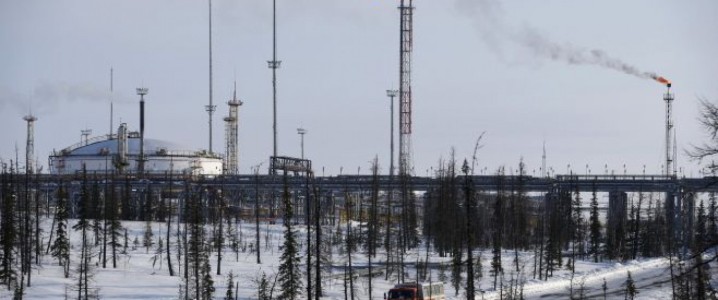
In addition to the then-current supply of Russian gas and oil through pipelines to China, and future expansion programmes thereof, Putin had been keen back in 2022 to push the idea of more Russian LNG supplies going through the NSR. This had early on been earmarked to serve as the primary maritime highway used by Russia to transport LNG from its remote Arctic extraction plants (including Yamal LNG and Arctic LNG 2) directly to international markets, particularly China. The Vostok Oil project in Russia’s Far North includes the Vankor cluster, the Zapadno-Irkinsky block, the Payakhskaya group of fields, and the East Taimyr cluster, which overall is estimated to hold proven liquid hydrocarbons reserves of at least 6 billion metric tons (about 51 billion barrels), all within close proximity of the NSR. Rosneft chief executive officer Igor Sechin had promised Putin before the leader met Xi in February 2022 that the Vostok Oil project and corollary build-out of the NSR would create a ‘new oil and gas province’ on Siberia’s Taymyr peninsula. The complete project was projected at that point to cost RUB10 trillion (then-USD135 billion), including two airports and 15 ‘industry towns.’ According to Sechin, Rosneft’s Arctic developments would eventually produce 100 million tonnes of oil per year (slightly over 200,000 barrels per day), with 30 million tonnes of oil being sent from the Arctic along the NSR between then and 2024 alone. Last week’s launch of the Vostok Oil project involved the opening of a new pipeline linking the Vankor and Payakha fields with Bukhta Sever, with a design capacity of 100 million metric tons per year. It also saw the loading of first oil onto the Arc7 ice-class Arctic tanker Valentin Pikul at the Bukhta Sever Port on the Kara Sea. Given ongoing sanctions constraints, Sechin said that commissioning the Vostok Oil project will enable the supply of 30 million metric tons of oil as early as H2 2027 and up to 50 million metric tons by 2030. Bukhta Sever Port already has an oil-loading berth, two cargo berths, a port fleet berth, and 14 storage tanks with a capacity of 30,000 metric tons of oil, according to Rosneft.
At the same time as Rosneft was building out the Vostok Oil project, Gazprom Neft — Russia’s then-third biggest oil company by output and the oil arm of state gas giant Gazprom — was busy boosting exports through the NSR. In July 2020, its first cargo of oil produced in the Arctic to China via the NSR had been successfully shipped, taking 47 days to deliver the full cargo of 144,000 tonnes of sweet, light Novy Port oil to the Chinese port of Yantai on the Bohai Sea from Russia’s north-western city of Murmansk. A month later, Gazprom Neft announced a new joint venture with the UK’s Shell, focused on the exploration and development of oil and gas resources along the Gydan peninsula area, particularly at the Leskinsky and Pukhutsyayakhsky licence blocks. The Leskinsky block was estimated to contain at least 100 million metric tons of oil equivalent across its over 3,000 square km area, while the Pukhutsyayakhsky block is estimated to hold at least 35 million metric tons of oil equivalent. As Rosneft has found, implementing these plans in the light of sanctions arising from Russia’s invasion of Ukraine on 24 February 2022 has been difficult for Gazprom Neft. For a start, Shell withdrew from all its joint ventures with Gazprom and Gazprom Neft in early 2022, including its 50% stake in the Gydan Energy joint venture that holds the rights to the Leskinsky and Pukhutsyayakhsky blocks. From that point, Gazprom Neft took full control of the assets and has been forced to rely on state-backed Russian banks for financing. The firm has also needed to switch away from the Western specialised technology that makes navigating the frozen NSR waters possible for longer in the year, substituting this with conventional, non-ice-class oil tankers through the Arctic’s summer windows when the ice retreats and by extending the deployment times of its heavy nuclear icebreakers. These are used to carve routes through the ice for the lower-tier cargo vessels.
That said, the U.S. intends to make any further expansion of Russia into the Arctic region for whatever reason as difficult as possible, regardless of whether there is a war in Ukraine or not. Although the U.S.’s 2025 National Security Strategy does not explicitly mention the Arctic region, it does call for reallocating military assets to secure access to ‘strategically important locations’ and critical supply chains. This is widely regarded as a direct reference to the Arctic’s critical minerals and strategic shipping lanes, particularly considering presidential memoranda to fast-track Arctic Security Cutters (icebreakers), the formation of the trilateral ‘ICE Pact’ with Canada and Finland, and a massive restructuring by the Department of War that shifted jurisdictions to protect the northern approaches. Indeed, President Donald Trump’s unwavering insistence that U.S. ‘ownership’ of Greenland was necessary — rather than any lease?based arrangement — because only that would allow Washington to defend the territory attests to how seriously Washington regards Russian and Chinese expansion in the Arctic.
These concerns appear entirely merited, as Putin too has long seen the Arctic as a platform for projecting Russian power far beyond its traditional boundaries. The Kola Peninsula — located in the extreme northwest of Russia at the edge of northern Europe, entirely inside the Arctic Circle — hosts roughly half of Russia’s fleet of nuclear?powered, nuclear?armed ballistic missile submarines, including 12 strategic nuclear submarines carrying up to 192 nuclear?capable ballistic missiles, plus dozens of cruise?missile and special?purpose nuclear submarines. In practice, the Arctic functions as Moscow’s second?strike insurance if its main domestic nuclear forces were ever neutralised. The region also remains a key site for testing advanced systems, including hypersonic missiles, nuclear?powered torpedoes, and cruise missiles, while Russia’s state nuclear company Rosatom also maintains nuclear power plants in the Arctic. Reinforcing Putin’s vision of Russia as the dominant Arctic power was the recent ratification of the ‘Reciprocal Exchange of Logistics Support’ pact, a deal that quietly extends India’s and Russia’s military cooperation into Russia’s Arctic ports and the NSR. Ultimately, Putin’s renewed push into the Arctic could provide him with the boost in oil and gas revenues required to sustain his long-term attritional war in Ukraine. Moreover, by binding Beijing’s energy security and New Delhi’s northern military logistics to the Russia-controlled NSR, this USD135 billion gamble cements the alternative, non-Western alliances Moscow needs to weather an even more protracted conflict.
This post appeared first on https://oilprice.com